Core Definition: "CNC stands as a cornerstone of modern industry. This computer-controlled process automates precision cutting, milling, and turning"
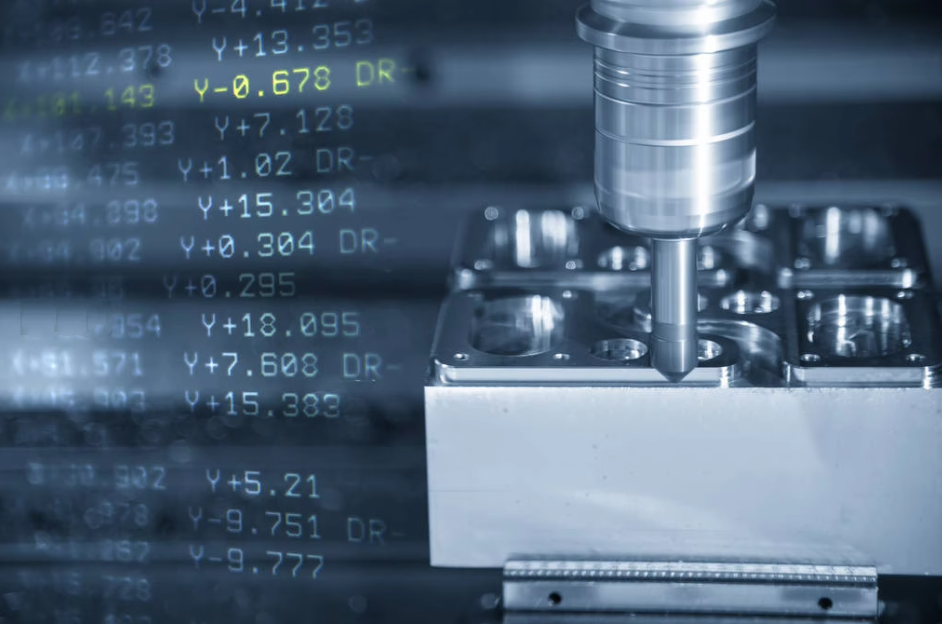
CNC machining: a manufacturing revolution in the digital age
In the heart of modern manufacturing, a silent revolution driven by digital codes is reshaping the production landscape. CNC (Computer Numerical Control) machining, with its high precision, high efficiency and excellent flexibility, has become the cornerstone of manufacturing from precision medical devices to aerospace components. It is not just an evolution of tools, but also represents a fundamental shift in manufacturing thinking - the ability to seamlessly transform complex blueprints into physical parts.
Core driving force: precise execution of digital instructions
The essence of CNC machining is to convert digital designs (CAD models) into precise machine instructions (G codes) through computer software (CAM), drive the movement of each axis of the machine tool and control the movement of the tool. This process eliminates the human errors that are difficult to avoid in traditional manual operations, ensuring that every processing can achieve amazing micron-level consistency regardless of the complexity of the part.
King of precision: Modern high-end CNC machine tools have positioning accuracy of up to ±0.0025mm or even higher, and the surface finish is comparable to that of a mirror, meeting the most demanding precision engineering needs.
Efficiency Leap: 7x24 hours continuous operation, extremely short workpiece clamping time, optimized cutting path, significantly shortened production cycle, and reduced unit cost.
Complex shape master: Five-axis linkage technology gives the tool space the ability to cut into any angle, making turbine blades, integral impellers, complex mold cavities and other geometric shapes that were previously "unmachinable" possible.
Flexible manufacturing model: Program switching means product conversion, which is particularly suitable for small batch and multi-variety modern production mode and quickly responds to market demand.
CNC machining equipment: A powerful engine for precision manufacturing
The value of CNC technology is released through a variety of machining equipment, which constitutes the intelligent backbone of modern factories:
CNC milling machine (machining center):
Core: Rotating tool cutting workpieces, good at cavity, surface, and plane processing.
Three-axis: Basic configuration (X, Y, Z), complete most milling tasks.
Four-axis: Add a rotary axis (A axis) to process cylindrical surfaces or parts that need to be indexed.
Five-axis: Top complex surface solution. Add two rotating axes (such as A/B or B/C) to complete the processing of almost any angle in one clamping, greatly improving the accuracy and efficiency of complex parts. Vertical/horizontal adapts to workpieces of different sizes.
Turning and milling compound center: Integrating turning and milling capabilities, completing all processes in one clamping, reducing error accumulation, and is a benchmark for efficient and precise manufacturing.
CNC lathe (turning center):
Core: Workpiece rotation, fixed tool cutting, specializing in rotating parts (shafts, discs, sleeves).
Two axes: Basic (X, Z).
Multi-axis/turning and milling compound: Integrated milling cutters, drills and other power tools, can mill grooves, drill holes, and tap, realizing "Done-in-One" processing.
CNC drilling machine/tapping center:
Focus on completing large-scale drilling, reaming, and tapping tasks efficiently and accurately, and optimizing the hole processing process.
CNC grinder:
Using high-speed rotating grinding wheels for finishing, it can achieve sub-micron precision and extraordinary surface quality, which is the final process guarantee for precision bearings, tools, and key mechanical parts.
Special CNC equipment:
Wire cutting (WEDM): Using the principle of electric spark erosion, extremely fine metal wires are used to cut conductive hard materials (such as mold steel), and it is good at precision contours, narrow gaps, and inner sharp corners.
Laser cutting machine: High-energy laser beams can achieve fast and contactless cutting of metal/non-metallic sheets with high precision and low thermal impact.
Water jet cutting machine: Ultra-high pressure water flow (or mixed abrasives) cuts almost any material (metal, stone, composite materials) without thermal deformation.
Empowering thousands of industries: from the cloud to the inside of the body
CNC technology has been deeply integrated into the blood of modern industry:
Aerospace: Engine turbine blades (five-axis milling), high-strength fuselage structural parts, landing gear precision parts, challenging the limits and precision of materials.
Automotive industry: engine cylinder block/cylinder head (high-efficiency machining center), precision transmission gear (turning and milling compound), mold (high-speed milling, EDM) and new energy vehicle parts.
Medical devices: artificial joints (five-axis precision machining), complex surgical instruments (micro-machining), dental implants (high biocompatible material processing), which are related to the quality of life.
Mold manufacturing: injection molds, die-casting molds, stamping molds (core relies on high-speed milling, EDM), which are the key "matrix" for mass production of products.
Electronic communications: mobile phone/computer casings (high-speed milling), radiators, precision connectors (micro-machining).
Energy equipment: turbine components, precision parts of nuclear power plants, oil valves, reliable operation in extreme environments.
Future trends: intelligent and interconnected manufacturing
CNC technology is still evolving rapidly:
Intelligent: integrated AI optimizes cutting parameters, predicts tool wear, automatically compensates for thermal deformation/tool wear, and improves efficiency and stability.
Internet of Things (IoT): equipment networking monitors operating status, energy consumption, and efficiency in real time to achieve predictive maintenance and production big data analysis.
Automation integration: Seamlessly connect with industrial robots and AGVs to build flexible automated production lines (FMS).
Hybrid Manufacturing: Integrate 3D printing (additive) and CNC machining (subtractive) in the same device to unlock new design freedom and material applications.
Digital twin: Virtual simulation optimizes processing solutions and reduces trial and error costs.
Conclusion
CNC machining and its equipment system perfectly combine cold metal with invisible codes, and continue to drive the manufacturing industry towards a future with higher precision, higher efficiency and stronger adaptability. From precision microelectronic components to flying vehicles, CNC technology, as the cornerstone of digital manufacturing, continues to expand the boundaries of human creativity and reshape the way we understand and build the material world. It is not only a tool for efficient production, but also a core engine that drives industrial innovation and realizes complex design dreams. In the era of intelligent manufacturing, it continues to define manufacturing precision and infinite possibilities.
2025 Shenzhen DMP Industrial Expo is About to Open: Explore New Opportunities in Future Intelligent Manufacturing
Wishing you all a prosperous New Year!
Related Article